Is a Greenhouse or a High Tunnel Right for You?
As the long summer days fade into crisp autumn evenings, many gardeners start preparing their gardens for winter rest. But for those who want to keep growing year-round, a greenhouse or high tunnel can make all the difference.
At first glance, these two structures might look similar — both feature curved frames and clear coverings — but their functions, costs, and climates differ quite a bit. If you’re deciding which setup best fits your garden, here’s how they compare.
High Tunnels
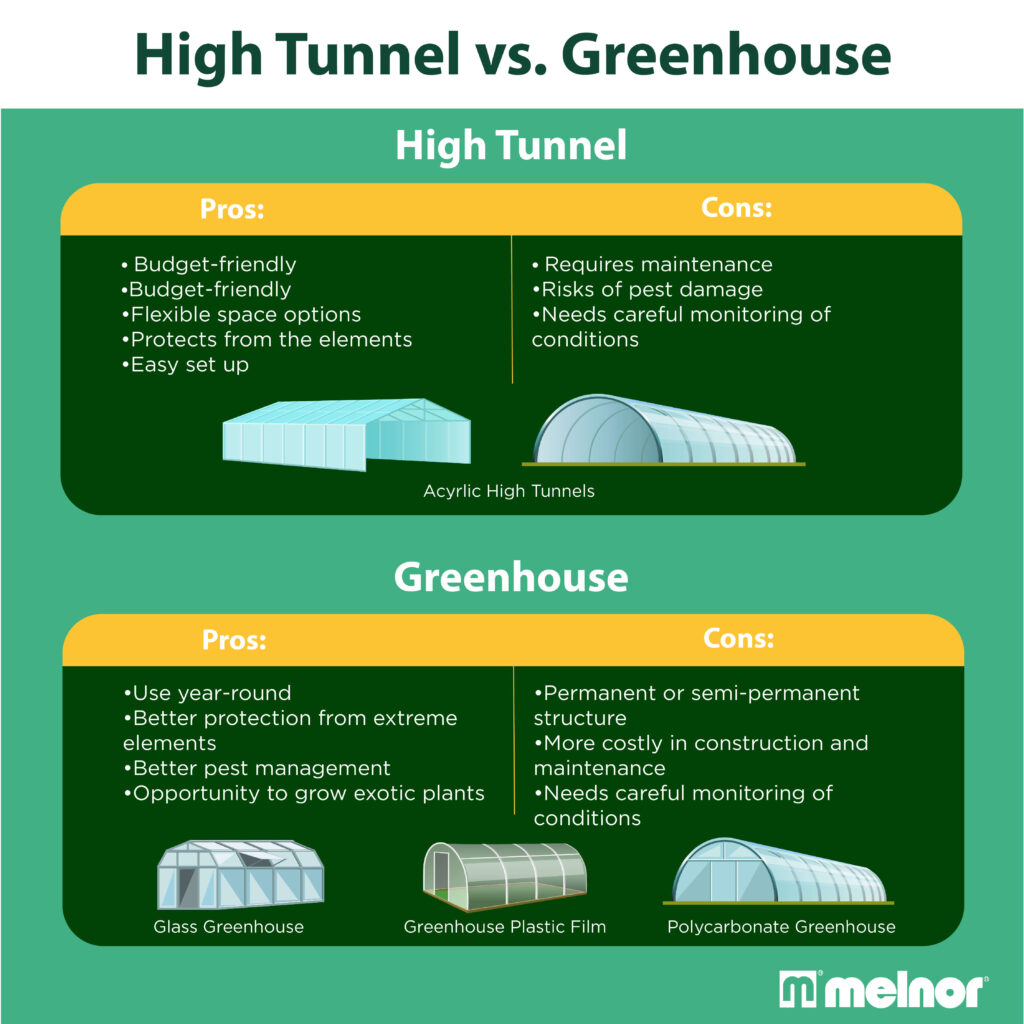
High tunnels, sometimes called hoop houses, are designed to extend the growing season. They help gardeners get an early start in spring and continue producing crops into late fall — and sometimes even winter — depending on your climate.
These structures are typically made from metal hoops covered with polyethylene film, plastic, or fabric. Inside, plants are grown either directly in the ground or in raised beds. Because they don’t require heating, ventilation systems, or permanent foundations, high tunnels can be built for a fraction of the cost of a greenhouse.
Each end of the tunnel opens wide to provide natural airflow and prevent overheating. This ventilation is essential since high tunnels rely solely on passive temperature control — no electricity or automated systems are involved. They work best in regions with mild winters or where gardeners want a seasonal temperature boost during the cooler months.
Greenhouses
Greenhouses take things a step further. They provide a fully enclosed, climate-controlled environment that allows you to grow plants year-round — no matter how cold it gets outside.
Typically made from polycarbonate panels, glass, and metal frames, greenhouses are equipped with electricity for automated heating, lighting, and ventilation systems. Plants are usually grown in pots or containers above the ground, giving you greater control over soil quality and watering needs.
While a greenhouse costs more to build and maintain, it’s also more durable. It can handle snow, wind, and freezing temperatures — keeping your plants safe and thriving through the winter. Over time, that investment can pay off in fresh produce, flowers, and herbs all year long.
Watering Needs in Covered Growing Spaces
Whether you’re planting in a high tunnel or greenhouse, smart watering is key to success. Young seedlings need a gentle touch — use a fine-mist nozzle or watering wand to encourage healthy root growth. Light, even passes help the water soak in without disturbing delicate soil.
For more targeted watering, try a Melnor Flat Soaker Hose. Weave it around the base of your plants to deliver moisture directly to the roots, minimizing waste and runoff. The slow, steady seep keeps your soil evenly moist and your plants strong.
Once your plants mature, upgrade to a multi-adjustable sprinkler, like our Melnor Garden Watering Kit.
With built-in flow control and adjustable spray angles (from 0° to 360°), you can fine-tune coverage and conserve water at the same time.
To make things even easier, connect your watering system to a Melnor digital water timer. Schedule watering sessions on specific days and times — and let the timer handle the rest. Just set it and forget it!
💡 Cold-Weather Tip: When the outdoor temperature drops below 40°F (4.5°C), it’s best to pause watering and drain your hoses, sprinklers, and timers. Store them indoors until the next warm spell or spring season. This simple step helps prevent damage and keeps your Melnor tools ready for next year’s garden.
Choosing What’s Right for You
If you’re in a region with mild winters and want a simple, budget-friendly way to extend your growing season, a high tunnel may be the perfect fit. But if you dream of fresh greens in January or need protection from harsh weather, a greenhouse offers the control and durability you’ll want for year-round gardening.
Whichever you choose, the right watering setup can make your growing season smoother — and your harvests more rewarding. And remember: when the season turns cold, store your watering tools indoors to protect them from freezing and keep them performing like new.